
Secure. Managed. Workflow-Ready.
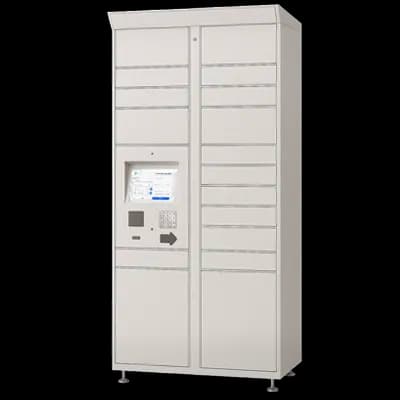
DMVI supplies electronic smart locker systems for parcel collection, food pickup, employee storage, asset management, and controlled-access workflows. Cloud-connected, configurable, and built to fit real operational environments.
The problem they solve
Storage and handover without the friction
Most collection and storage problems are workflow problems, not space problems. Staff time disappears into manual handovers, missed deliveries, and avoidable back-and-forth.
Smart lockers remove the human bottleneck. Items are deposited, held securely, and collected on the recipient’s schedule while every step is authenticated and logged.
If you want the more specific commercial page, start with locker vending systems.
Core operational benefits
- No supervised handovers: recipients collect when convenient, without tying up staff.
- Controlled access by design: QR, PIN, RFID, or mobile-based authentication keeps custody clear.
- Operational visibility: occupancy, exceptions, and alerts can be monitored remotely.
Configured around your use case
The right locker system depends on what is being stored, who is accessing it, and how the workflow operates. We scope from the workflow up instead of forcing a standard product into the wrong job.
Parcel & click-and-collect lockers
For retail, logistics hubs, and residential schemes where couriers deposit and recipients collect without staff involvement.
Food collection lockers
For prepared food, hospitality, and canteen workflows with ambient, heated, or chilled collection options.
Temperature-controlled lockers
For food, pharmaceutical, clinical, or specialist workflows where temperature range, hold period, and alerting matter.
Asset management lockers
For tools, devices, PPE, keys, and other accountable equipment that needs issue, return, and audit visibility.
Employee & workplace lockers
For shared-workspace or hot-desking environments where day-use and centrally managed allocation are more useful than fixed lockers.
Secure & controlled-access storage
For restricted handovers, high-value storage, secure document exchange, or regulated access scenarios.
Multiple access methods. One managed system.
Authentication should fit the environment, not the other way round. Public-facing collection points need a different experience from staff lockers or restricted asset custody programs.
QR code
Low-friction access for parcel and food collection workflows without extra user hardware.
PIN code
Simple numeric access for users who do not need an app or smartphone-led flow.
RFID / NFC card
Tap-to-open access for staff lockers, workplace environments, and asset-control programs.
Barcode
Useful for order-based collection, inventory-driven release, or higher-throughput handover environments.
Mobile / app access
App-led or phone-based workflows can be supported where the deployment and user base justify it.
Operator override
Authorised administrators can reassign, open, or clear compartments through the management layer when needed.
Operational oversight, not just a control panel
Live occupancy view
See which compartments are occupied, empty, overdue, or waiting for collection without visiting the hardware.
Alerts & notifications
Surface uncollected items, temperature deviations, access failures, and maintenance conditions before they become operational pain.
User & permission management
Create, assign, and revoke access for individual users or groups, including role-based access structures.
Transaction reporting
Maintain a full log of deposits, collections, access attempts, and overrides for operational review or compliance needs.
Multi-site management
Manage more than one locker bank across locations from a central interface where the deployment warrants it.
Integration pathways
API and connectivity options vary by system, so the software conversation is scoped alongside the hardware and workflow.
Scoped around the workflow, not the product range
- Workflow-first brief | DMVI starts with who deposits, who collects, what timescales matter, and what happens when something goes wrong.
- Appropriate configuration | Locker systems vary significantly in size, access method, thermal capability, and software depth. The right answer depends on the real use case.
- Practical deployment thinking | Power, connectivity, branding, installation environment, and day-to-day use are addressed during scoping rather than treated as afterthoughts.
- B2B-focused supply | Enquiries are handled commercially, with proper specifications, realistic lead times, and clear conversations about fit and price.
Tell us about your workflow
DMVI scopes locker systems from the use case up. Share what is being stored, who needs access, what environment the system will live in, and any software or compliance constraints — then we can recommend the right configuration.
Frequently asked questions
Smart lockers are used wherever items need to be deposited, held securely, and collected by an authorised person without a supervised handover. Common use cases include parcel pickup, prepared food collection, workplace storage, asset issue and return, and restricted-access handovers.
Yes. Heated, chilled, and freezer-capable configurations are available for the right applications. These are not the same as standard ambient lockers, so the correct thermal specification needs to be scoped around the workflow and hold conditions.
Depending on the system, lockers can support QR code, PIN, RFID/NFC card, barcode, mobile-app access, and operator override. The right method depends on the user base, infrastructure, and security requirements.
Some configurations are suitable for sheltered outdoor use, but suitability depends on weather exposure, vandal resistance, connectivity, and site conditions. That needs to be confirmed during scoping rather than assumed.
Branding options vary by system, but vinyl wraps, printed panels, and certain software-side branding treatments are commonly possible. Full custom finishes depend on the product line, order volume, and lead time.