Naloxone Vending Machines for Public-Health Programmes
By Digital Media Vending
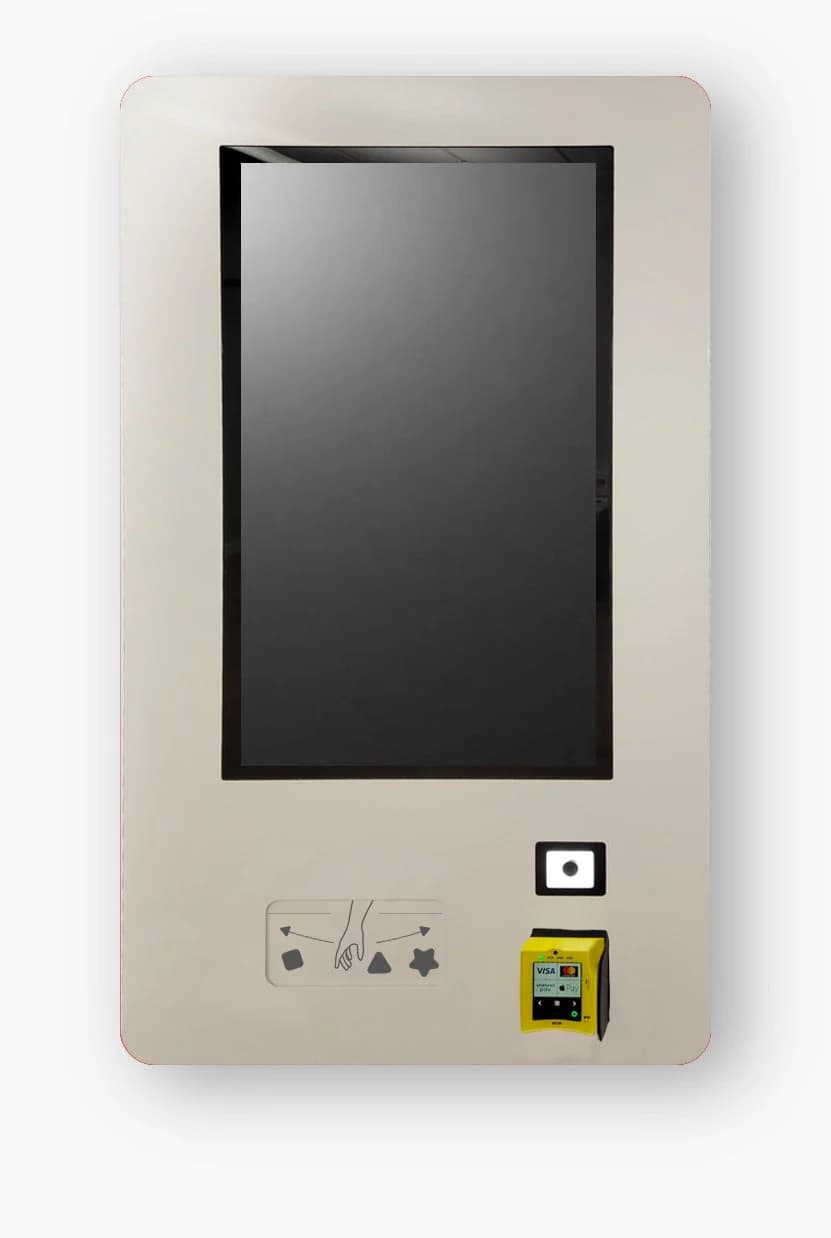
DMVI's naloxone vending machines run on our proven wall-mounted platform with programme-specific dispensing logic, multilingual touchscreen guidance, and cloud-managed oversight. Built for counties, public-health departments, hospitals, nonprofits, and community operators who need a properly managed access model—with approved content, inventory visibility, and site-by-site controls—rather than a standard cabinet placed in a high-need location. This page is for teams already comparing naloxone-specific machine paths, not buyers still defining the broader harm-reduction category.
Price starts at: $4,595.00
Availability: SCOPED FOR PUBLIC-HEALTH, HEALTHCARE & NONPROFIT DEPLOYMENTS
Public-health
focused
Multilingual
touchscreen
Cloud
managed


Financing
Join the Club of Automated Retail Pioneers
Get It Now, Pay Later
Unlock your purchasing potential. Get prequalified risk-free — your credit score stays safe.
Check your purchasing power with:

DMVI Smart Wall Mounted Vending Machine (10 Coil)
$7,326.90
DMVI Smart XL Wall Mounted Vending Machine (20 Coil)
$8,557.12
Drag The Sliders
To Calculate Your Future Revenues
Disclaimer: This tool is for demonstration purposes only, earnings are not guaranteed and may vary based on multiple factors.
Potential Revenue:
Total revenue per VM refill: $2,000
Total revenue from all VMs: $4,000
Let’s Discuss Your Goals
Speak with an expert and unlock special pricingWhat Buyers Should Evaluate Before Ordering a Naloxone Vending Machine
Counties, hospitals, nonprofits, and community operators typically need the machine format, the software flow, and the programme logic to align from the start. That means clear touchscreen guidance, approved local-resource content, and enough operator visibility to manage replenishment and site activity across one location or many.
Built for Harm-Reduction and Public-Health Deployment Reality
- Programme-specific naloxone / Narcan dispensing workflows
- Multilingual touchscreen guidance for diverse community settings
- On-screen instructional content and QR follow-up support
- Approved local-resource menus for shelters, food banks, and service partners
- Cloud-based inventory, machine-status, and activity visibility
- Remote content updates across one or many sites
- Flexible access models depending on programme rules and funding
- Wall-mounted footprint for hospitals, shelters, libraries, campuses, and public buildings
- Flexible shelf layouts for naloxone and other approved harm-reduction supplies
- A stronger deployment path than handing public-health access over to a generic vending workflow
Technical Specifications
| Option 1 | Option 2 | |
|---|---|---|
| Product Name | DMVI Smart Narcan Vending Machine | DMVI Smart XL Narcan Vending Machine |
| Brand | Digital Media Vending International (DMVI) | Digital Media Vending International (DMVI) |
| Display | 32″ HD Capacitive Touchscreen | 32″ HD Capacitive Touchscreen |
| Aspect Ratio | 16:9 | 16:9 |
| Dispensing System | Coil / Spiral mechanism | Coil / Spiral mechanism |
| Shelves | 10 Shelves (Standard setup) | 20 Shelves (or dual-depth configuration) |
| Capacity | Up to 20 items per shelf (varies by product size) | Increased capacity for small items, up to 20 items per shelf (varies by product size) |
| Items capacity | Up to 200 items total | Varies (Up to 400 items total based on SKU setup) |
| Product Selections | 10 SKUs | 20 SKUs |
| Dimensions | H45″ x W25⅝″ x D9″ | H45″ x W25⅝″ x D12″ |
| Voltage | 100–240 V | 100–240 V |
| Power Consumption | 80 W @ 110V (Average load) | 80 W @ 110V (Average load) |
| Payment System | Cashless (NFC, Credit/Debit, Mobile Pay) | Cashless (NFC, Credit/Debit, Mobile Pay) |
| Connectivity | Cloud Management, 4G Router, Wi-Fi | Cloud Management, 4G Router, Wi-Fi |
| Scanners | QR Code Scanner | QR Code Scanner |
| Shelf Design | Fixed Coil Trays | Deep Coil Trays / Swing-out access |
| Installation Type | Wall Mounted (with bracket) | Wall Mounted or Stand Mounted |
| Financing |  | |
Product Name
Option 1
DMVI Smart Narcan Vending Machine
Option 2
DMVI Smart XL Narcan Vending Machine
Brand
Option 1
Digital Media Vending International (DMVI)
Option 2
Digital Media Vending International (DMVI)
Display
Option 1
32″ HD Capacitive Touchscreen
Option 2
32″ HD Capacitive Touchscreen
Aspect Ratio
Option 1
16:9
Option 2
16:9
Dispensing System
Option 1
Coil / Spiral mechanism
Option 2
Coil / Spiral mechanism
Shelves
Option 1
10 Shelves (Standard setup)
Option 2
20 Shelves (or dual-depth configuration)
Capacity
Option 1
Up to 20 items per shelf (varies by product size)
Option 2
Increased capacity for small items, up to 20 items per shelf (varies by product size)
Items capacity
Option 1
Up to 200 items total
Option 2
Varies (Up to 400 items total based on SKU setup)
Product Selections
Option 1
10 SKUs
Option 2
20 SKUs
Dimensions
Option 1
H45″ x W25⅝″ x D9″
Option 2
H45″ x W25⅝″ x D12″
Voltage
Option 1
100–240 V
Option 2
100–240 V
Power Consumption
Option 1
80 W @ 110V (Average load)
Option 2
80 W @ 110V (Average load)
Payment System
Option 1
Cashless (NFC, Credit/Debit, Mobile Pay)
Option 2
Cashless (NFC, Credit/Debit, Mobile Pay)
Connectivity
Option 1
Cloud Management, 4G Router, Wi-Fi
Option 2
Cloud Management, 4G Router, Wi-Fi
Scanners
Option 1
QR Code Scanner
Option 2
QR Code Scanner
Shelf Design
Option 1
Fixed Coil Trays
Option 2
Deep Coil Trays / Swing-out access
Installation Type
Option 1
Wall Mounted (with bracket)
Option 2
Wall Mounted or Stand Mounted
Financing
Advanced Features
Software that connects naloxone access, on-screen guidance, and operator oversight.
For public-health buyers, the cabinet is only part of the evaluation. The software layer typically determines whether the deployment is operationally manageable: multilingual machine flows, approved instructional content, programme-specific resource information, inventory visibility, and central oversight across sites. That is what distinguishes a naloxone vending deployment from a machine that happens to contain a useful product.

Multilingual self-service flow
Support clearer machine use across varied communities, sites, and public-facing environments.
Instructional content at the point of access
Surface approved on-screen guidance or follow-up QR content without relying on a staff member being nearby.
Local service-resource connection
Show approved information for shelters, food assistance, crisis resources, treatment contacts, or other community services selected by the operator.
Cloud-managed programme control
Review content, site settings, and machine status from one place instead of treating each machine as an isolated exception.
Inventory and usage visibility
Help programme teams coordinate replenishment and support with a cleaner view of what is happening in the field.
Deployment-specific configuration
Keep the machine aligned with the programme model, the site constraints, and the audience being served instead of forcing one generic template everywhere.
Planning a Narcan or harm-reduction deployment?
Show DMVI the site types, programme rules, content needs, and rollout goals so the machine path and software flow can be scoped properly.
Related Narcan deployment paths
Use this page for naloxone-machine evaluation, and the companion resources for category or software questions
If you want the software-specific side of the conversation, see DMVI's Narcan and harm-reduction vending software page on VendingTracker, which focuses on multilingual machine flows, operator visibility, and deployment-specific controls.
If you are researching the wider category first, our separate harm reduction vending machines page covers the broader institutional and programme context.
If you want the broader institutional-use case and programme framing, the companion DMVI public-health deployment guide adds more context around where these projects tend to fit.
Narcan & Harm-Reduction Vending Gallery



Narcan Vending Machine Rollout Options for Counties, Hospitals, and Nonprofits
Built for managed public-health deployment
The strongest programmes treat the machine as part of a managed public-health access model with clear site rules, approved content, and a sensible operating plan.
Support resources can live on the screen
The touchscreen can be configured to surface approved community resources such as shelters, food banks, treatment contacts, or other local services the programme wants accessible in the moment.
Built for site-by-site rollout reality
Counties, healthcare systems, and nonprofits often need different language, placement, access, and content decisions by location. The machine should be able to support that reality cleanly.
Book Your Live Demo Today
Review the machine format, the naloxone-specific software flow, and the right rollout path for your programme.
Proven hardware adapted for harm-reduction deployments
DMVI's wall-mounted platform is a proven commercial product, not a concept adapted from another use case. The Narcan deployment path is built around naloxone access logic, multilingual programme communications, and operator oversight—not retrofitted from a generic machine template.
Key Capabilities Public-Health Teams Expect From a Naloxone Vending Machine
Lower-friction access where public-health teams need it
Public-health buyers are usually trying to reduce practical barriers like limited hours, stigma, or unclear access points rather than merely adding another cabinet to a building.
Better visibility for operators and funders
Cloud-based oversight helps programme teams monitor stock, site activity, and deployment health across one machine or a broader rollout.
A machine that can also guide the next step
When the screen can present approved instructions and local-resource information, the machine becomes a more useful public-health touchpoint than a silent dispenser.
FAQs
The most common buyers and deployment partners are counties, public-health departments, hospitals, healthcare systems, nonprofits, shelters, campuses, and other institutions that need a controlled self-service access point rather than a generic retail machine.
Yes, it can be configured around programme rules that support no-cost or grant-funded distribution, but the exact access model depends on the organisation, the site policy, the funding structure, and how the programme wants the machine to operate.
Yes. DMVI can support programme-specific touchscreen flows that surface approved local resources such as shelters, food banks, treatment contacts, crisis information, or other community support options the operator wants available at the machine.
Because public-health deployments often need more than product dispensing. Buyers usually care about multilingual guidance, instructional content, approved resource information, remote visibility, and site-by-site administration, which is where the software layer starts to matter.
They can be scoped for extended-hour or 24/7 access when the site, security model, stocking plan, and programme rules support that approach. The stronger question is not whether the phrase sounds good in marketing, but whether the placement is operationally sound.
Yes, where programme rules allow it. Many harm-reduction deployments evaluate naloxone alongside test strips, wound-care items, hygiene supplies, educational materials, or other approved public-health products that fit the cabinet and the programme design.